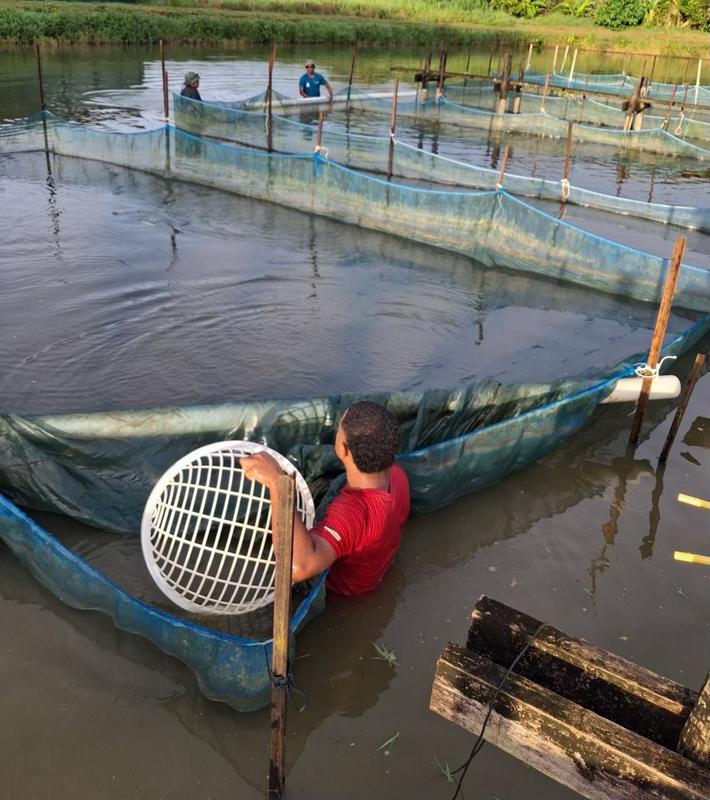
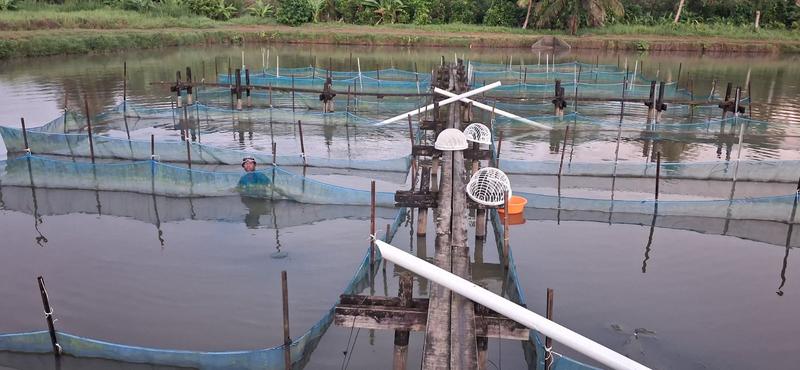
Fisheries officers at the Naduruloulou Research Station have been actively engaged at the start of the year in the systematic collection of tilapia fry from government ponds as part of the Ministry of Fisheries’ ongoing aquaculture research, development, and community support efforts.
In the first days of 2026, officers focused on harvesting fry from earthen pond SP3, retrieving fry from 14 breeding hapas — specialized enclosures designed to optimise natural spawning. The setup maintained a breeding ratio of approximately 100 females to 50 males to enhance fry production. On Wednesday, the team continued its work at earthen pond SP1, collecting fry from nine additional breeding hapas. These early stages of fish development are critical for later growth and distribution to both research programmes and rural farmers.
The work at Naduruloulou forms part of a broader government strategy under the Fiji Ministry of Fisheries’ Aquaculture Development Plan 2024–2028, which aims to expand sustainable aquaculture, boost food security, and support income generation in rural communities. The plan highlights tilapia as one of nine priority species for national aquaculture growth, alongside oysters, prawns, seaweed, and others, with targets to elevate domestic production and reduce imports while increasing export potential.
The Ministry’s Aquaculture Division oversees operations at Naduruloulou, one of the country’s key freshwater hatcheries responsible for fry production, distribution, and technical support to farmers across Fiji. The division’s mandate includes monitoring cultured species, providing extension services and training, coordinating hatchery operations, and ensuring the sustainable management of aquaculture resources for national food security.
Recent Ministry activities in other parts of Fiji demonstrate a continued push to strengthen tilapia farming throughout rural areas. For example, aquaculture teams in the Northern Division have collected thousands of tilapia fry for on‑farm grow‑out and have distributed fry to women’s groups and individual farmers to support income‑earning opportunities and bolster local food supplies.
According to government officials, these efforts not only contribute to research and genetic stock improvements but also play a vital role in community development by providing healthy, high‑quality fry that serve as the foundation for productive fish farms. The Ministry says that supporting farmers with fry supply, training, and technical advisory services strengthens the blue economy, enhances rural livelihoods, and helps Fiji move toward its aquaculture development goals set out for the mid‑2020s.