

Minister for Agriculture and Livestock Development Franklyn Derek Wasi has announced ambitious national targets to revitalise the poultry industry in the Solomon Islands.
Wasi outlined the targets while delivering opening remarks at a consultation meeting with local poultry farmers, emphasising the ministry’s commitment to addressing key challenges and promoting sustainable growth in the sector.
While acknowledging the efforts of local producers, Wasi said poultry farmers continue to face significant constraints, particularly the high cost of feed and the unreliable supply of day-old chicks.
“I understand that the biggest challenges you face are the high cost of feed and the unreliable supply of day-old chicks. These challenges place you at a disadvantage and make it difficult to compete with cheaper imported eggs and poultry products,” Wasi said.
National poultry industry targets
The Ministry of Agriculture and Livestock Development (MALD) aims to achieve the following targets within the next three years:
-
Establishment of a new hatchery at KGVI Farm with a capacity of 10,000 eggs, supported by the Food and Agriculture Organization and the European Union.
-
Procurement of mini feed mills to enable local production of poultry and piggery feed.
-
Development of 100 hectares of maize and corn farms on Guadalcanal to supply raw materials for domestic feed production.
-
Establishment of the Solomon Islands’ first commercial feed mill for poultry and piggery.
-
Establishment of the country’s first parent flock breeding centre to locally produce fertile eggs.
-
Distribution of 20,000 birds to 20 selected farmers this year, including feed and essential farm equipment.
-
Major infrastructure investments, including a World Bank-funded slaughterhouse nearing completion at KGVI Farm, as well as plans to acquire animal transport trucks and a mobile slaughter unit to support farmers outside Honiara.
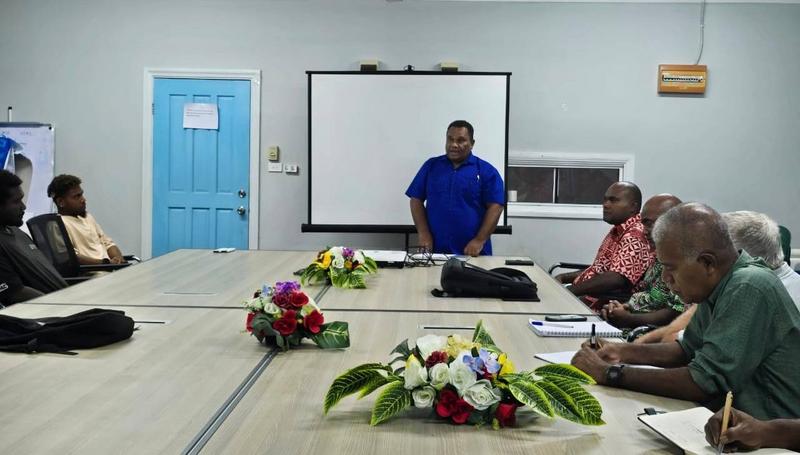
Wasi said the initiatives are expected to significantly increase domestic egg and poultry production, with a target to reduce retail prices to SBD25 per tray of eggs and SBD50 per whole chicken by the end of this year or early next year.
He said achieving these targets would enable the government to introduce higher taxes on imported poultry products and, in the longer term, impose import restrictions.
The strategy also promotes the establishment of poultry cooperatives to improve organisation, marketing and long-term sustainability.
Wasi stressed the importance of strong collaboration between MALD and poultry farmers, particularly accountability among those who have previously received government support.
“Together, we will rebuild the poultry industry into a vibrant, profitable and affordable sector that improves livelihoods and strengthens food security in the Solomon Islands,” he said.
During the consultation, farmers shared experiences operating farms with flock sizes ranging from 1,000 to 5,000 birds. Key challenges raised included high feed costs, unreliable chick supply, limited veterinary services, inadequate farm infrastructure and high bird mortality rates. Farmers also expressed concern about the impact of cheaper imported eggs and poultry products on local production and incomes.
Wasi said future ministry support would prioritise committed poultry farmers to ensure a reliable supply and sustainable industry growth.
In closing, he urged all past recipients of Solomon Islands Government support to submit reports detailing how previous funding was used.
“If past recipients wish to be considered for further funding, you must first submit reports on how previous assistance was utilised. Without this, MALD will not consider you for additional support,” he said.
MALD Permanent Secretary Dr. Samson Viulu assured farmers their concerns have been incorporated into the National Poultry Strategy 2026–2028.
The ministry reaffirmed that collaboration, accountability and continued engagement with farmers remain central to building a resilient and sustainable poultry industry in the Solomon Islands.


